- Also In:





+44 203 445 5766
institute@lloydmaritime.com


-

- Registration & Info
- Discover our institute
- Programs
-
Classroom
- Articles
- Opportunities
- Contact
Maritime Commercial Practices
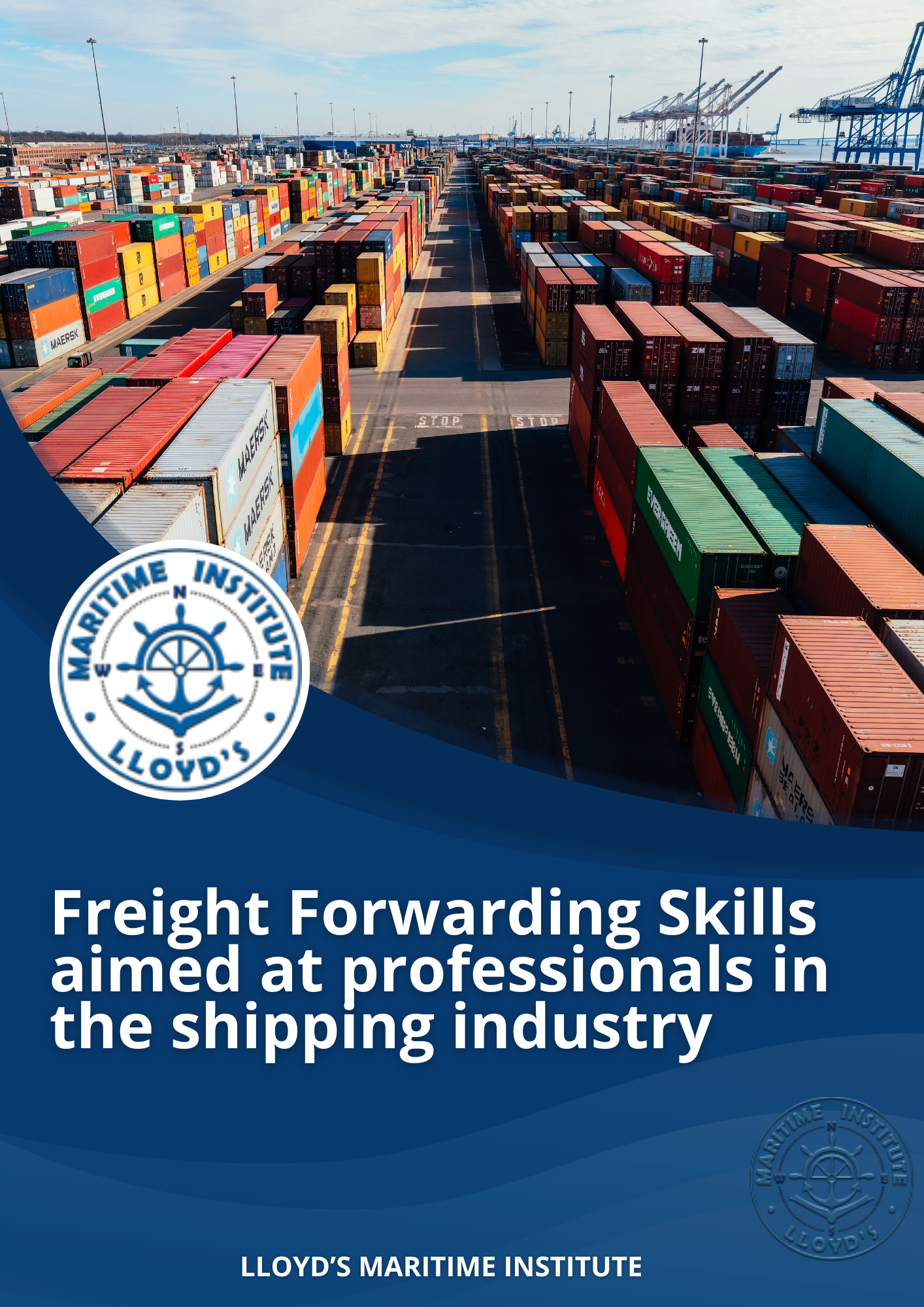
Freight Forwarding Essentials for Shipping Professionals
- Course Program
- Who Should Attend
- Compliance with regulations
- Duration and Teaching Methods
- Course Benefits
- Course Content
- Certification
Introduction
Freight forwarding plays a critical role in the global shipping industry, ensuring the smooth and efficient movement of goods across borders using multiple modes of transport. This course provides maritime professionals with a strong foundation in freight forwarding practices, covering essential topics such as documentation, customs compliance, route optimization, and risk management. Delivered by a leading maritime training institute, the program blends theoretical knowledge with practical application through real-world case studies and hands-on training at a fully equipped maritime centre. Participants will develop expertise in intermodal logistics, digital freight systems, and international regulatory frameworks—enabling them to enhance operational performance and contribute to global trade with confidence.Objectives
By the end of the course, participants will be able to:- Understand key freight forwarding processes, including import/export procedures, documentation, and risk mitigation strategies.
- Evaluate and manage logistics across air, sea, road, and rail transport, including intermodal solutions.
- Navigate customs regulations, trade agreements, and compliance standards to reduce delays and penalties.
- Utilize logistics software tools (e.g., TMS, WMS) for digital freight tracking and operational efficiency.
- Develop essential soft skills in customer service, negotiation, and stakeholder communication within the shipping and logistics industry.
Who Should Attend
This course is ideal for maritime professionals seeking to deepen their expertise in specific sectors of the industry. It is particularly beneficial for:- Shipowners, operators, and managers
- Maritime lawyers and legal consultants
- Marine engineers and technical superintendents
- Port and terminal operators
- Surveyors and classification society representatives
- Maritime insurance professionals
- Government and regulatory body personnel Lloyd's Maritime Institute
Course Benefits
- Acquire in-depth understanding of key maritime concepts and practices
- Enhance decision-making and problem-solving skills in real-world contexts
- Stay current with international regulations and industry trends
- Expand professional network through interactions with peers and experts
- Earn a recognized certificate upon successful completion, bolstering career advancement opportunities
Course Content
- Introduction to Freight Forwarding
- Modes of Transportation – The full logistical cycle
- Regulatory and Compliance Issues
- Technology in Freight Forwarding
- Business Skills and Networking
Duration and Teaching Methods
The course spans five consecutive days, combining theoretical knowledge with practical application through:
- Expert-led lectures and presentations
- Interactive group discussions and case studies
- Hands-on exercises and simulations
- Real-world scenario analyses
Compliance with regulations
TOur courses are designed in alignment with international maritime standards and conventions, including:- International Maritime Organization (IMO) regulations
- SOLAS, MARPOL, and STCW conventions
- International Safety Management (ISM) Code
- International Ship and Port Facility Security (ISPS) Code
- Relevant ISO standards
Assessment
Certification
tt.png)


Membership





Copyright © LLOYD'S MARITIME INSTITUTE. All rights reserved.