- Also In:







+44 203 445 5766
institute@lloydmaritime.com


-

- Registration & Info
- Discover our institute
- Programs
-
Classroom
- Articles
- Opportunities
- Contact
Marine Engineering
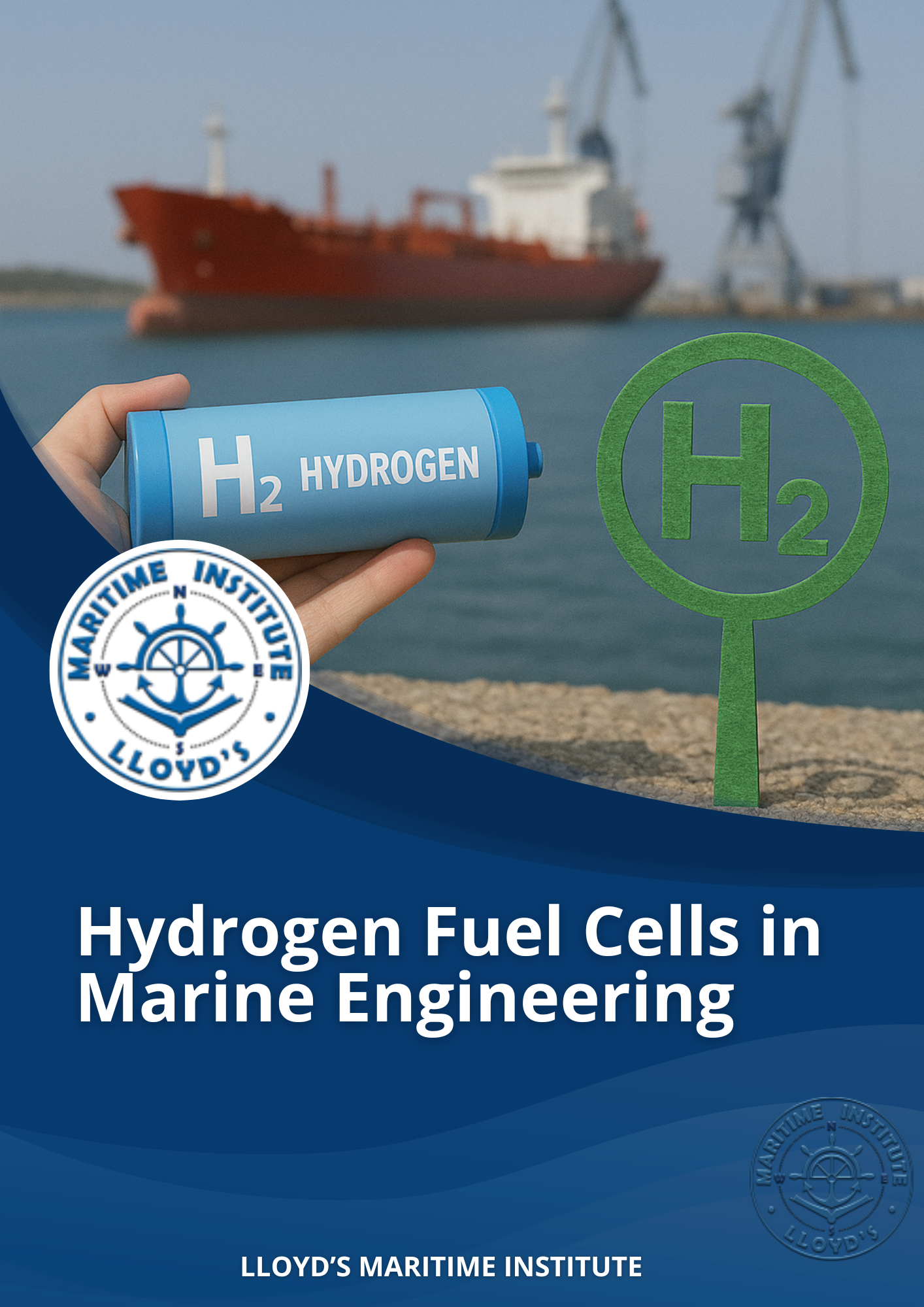
Hydrogen Fuel Cells in Marine Engineering
- Course Program
- Who Should Attend
- Compliance with regulations
- Duration and Teaching Methods
- Course Benefits
- Course Content
- Certification
Introduction
The Hydrogen Fuel Cells in Marine Engineering training course is designed to place participants at the forefront of green maritime technology. This innovative program explores the transformative potential of hydrogen fuel cells within naval engineering, offering an engaging, interactive learning experience tailored to today’s environmental and technological demands. Throughout the course, participants will gain a solid understanding of how hydrogen fuel cells serve as a clean and efficient alternative for powering marine vessels. The curriculum covers the principles of fuel cell design, functionality, and integration into maritime systems—highlighting their role in shaping a more sustainable future for the industry and the planet. Learners will also explore the challenges and opportunities associated with adopting hydrogen technologies at sea, examining their impact on propulsion systems, energy efficiency, and emissions reduction. Combining cutting-edge innovation with environmental responsibility, this course equips maritime professionals with the knowledge and tools to lead the transition toward cleaner, greener marine operations.Objectives
- Understand the core principles of hydrogen fuel cells in naval engineering
- Compare hydrogen fuel cells with conventional marine propulsion systems
- Evaluate environmental and sustainability impacts in maritime applications
- Gain skills in the design, installation, and maintenance of marine fuel cell systems
- Learn industry-specific safety standards and regulatory frameworks
- Analyze real-world case studies of hydrogen fuel cell implementation
- Assess the economic feasibility of hydrogen-based marine propulsion
- Explore infrastructure, storage, and distribution challenges and solutions
- Identify and troubleshoot common issues in fuel cell systems
- Explore future applications and research trends to foster innovation and critical thinking
Who Should Attend
This course is ideal for maritime professionals seeking to deepen their expertise in specific sectors of the industry. It is particularly beneficial for:- Shipowners, operators, and managers
- Maritime lawyers and legal consultants
- Marine engineers and technical superintendents
- Port and terminal operators
- Surveyors and classification society representatives
- Maritime insurance professionals
- Government and regulatory body personnel Lloyd's Maritime Institute
Course Benefits
- Acquire in-depth understanding of key maritime concepts and practices
- Enhance decision-making and problem-solving skills in real-world contexts
- Stay current with international regulations and industry trends
- Expand professional network through interactions with peers and experts
- Earn a recognized certificate upon successful completion, bolstering career advancement opportunities
Course Content
- Introduction to Hydrogen Fuel Cells and Marine Engineering
- Fundamentals of Hydrogen Fuel Cells
- Hydrogen Production, Storage, and Safety
- Integration of Hydrogen Fuel Cells in Marine Systems
- Future Perspectives and Emerging Technologies
Duration and Teaching Methods
The course spans five consecutive days, combining theoretical knowledge with practical application through:
- Expert-led lectures and presentations
- Interactive group discussions and case studies
- Hands-on exercises and simulations
- Real-world scenario analyses
Compliance with regulations
TOur courses are designed in alignment with international maritime standards and conventions, including:- International Maritime Organization (IMO) regulations
- SOLAS, MARPOL, and STCW conventions
- International Safety Management (ISM) Code
- International Ship and Port Facility Security (ISPS) Code
- Relevant ISO standards
Assessment
Certification
tt.png)


Membership





Copyright © LLOYD'S MARITIME INSTITUTE. All rights reserved.