- Also In:






+44 203 445 5766
institute@lloydmaritime.com


-

- Registration & Info
- Discover our institute
- Programs
-
Classroom
- Articles
- Opportunities
- Contact
Oil Spill Crisis Management
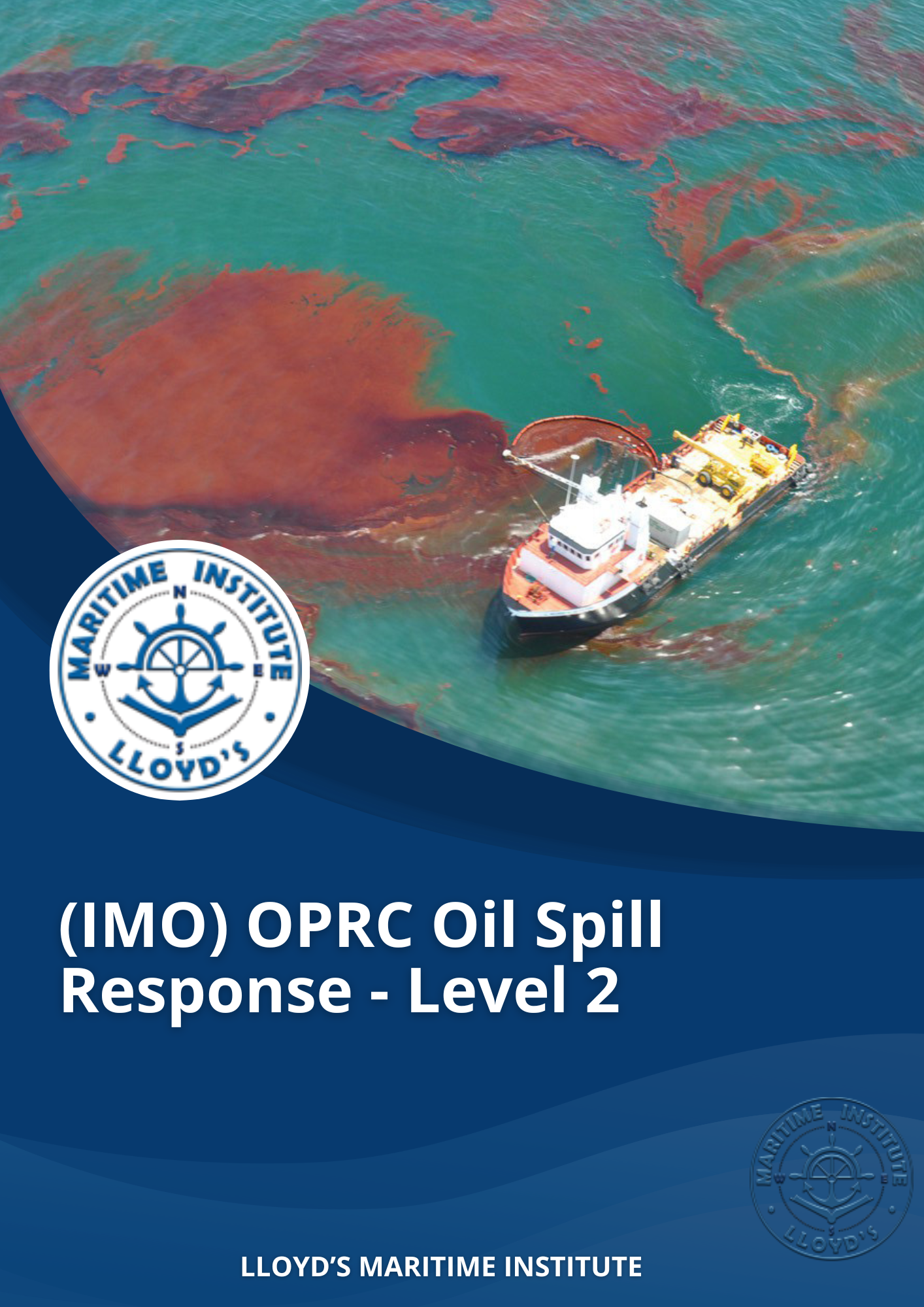
(IMO) OPRC Oil Spill Response Level 2
- Course Program
- Who Should Attend
- Compliance with regulations
- Duration and Teaching Methods
- Course Benefits
- Course Content
- Certification
Introduction
Gain advanced expertise in Oil Pollution Preparedness, Response, and Cooperation (OPRC) through our specialized Oil Spill Crisis Management Training Programme. This course is designed for professionals responsible for leading oil spill response efforts, offering in-depth knowledge of oil spill dynamics, strategic response measures, and environmental protection protocols. Participants will engage with the key provisions of the OPRC 1990 Convention, focusing on its practical implementation at the management level. Through a structured and scenario-based approach, the programme equips attendees with the tools and confidence to manage oil spill incidents effectively, in line with international standards and best practices. From early detection and impact assessment to response coordination, recovery, and post-incident restoration, the training provides a comprehensive understanding of the full lifecycle of oil spill response operations.Objectives
By the end of the course, participants will be able to:- Assess and apply a range of oil spill response strategies.
- Make sound operational decisions based on varying weather and sea conditions.
- Implement safe and environmentally responsible procedures for the disposal of recovered oil and debris.
- Understand and manage the weathering processes affecting oil in the marine environment.
- Analyse the environmental fate and degradation pathways of spilled oil in coastal and offshore settings.
- Develop and implement effective oil spill crisis management plans.
- Lead and coordinate initial response teams with confidence and competence.
Who Should Attend
This course is ideal for maritime professionals seeking to deepen their expertise in specific sectors of the industry. It is particularly beneficial for:- Shipowners, operators, and managers
- Maritime lawyers and legal consultants
- Marine engineers and technical superintendents
- Port and terminal operators
- Surveyors and classification society representatives
- Maritime insurance professionals
- Government and regulatory body personnel Lloyd's Maritime Institute
Course Benefits
- Acquire in-depth understanding of key maritime concepts and practices
- Enhance decision-making and problem-solving skills in real-world contexts
- Stay current with international regulations and industry trends
- Expand professional network through interactions with peers and experts
- Earn a recognized certificate upon successful completion, bolstering career advancement opportunities
Course Content
- Foundations of Oil Spill Management
- Operational Response Techniques
- On-site Response and Cleanup
- Communication and Legal Considerations
- Simulation Exercise and Course Conclusion
Duration and Teaching Methods
The course spans five consecutive days, combining theoretical knowledge with practical application through:
- Expert-led lectures and presentations
- Interactive group discussions and case studies
- Hands-on exercises and simulations
- Real-world scenario analyses
Compliance with regulations
TOur courses are designed in alignment with international maritime standards and conventions, including:- International Maritime Organization (IMO) regulations
- SOLAS, MARPOL, and STCW conventions
- International Safety Management (ISM) Code
- International Ship and Port Facility Security (ISPS) Code
- Relevant ISO standards
Assessment
Certification
tt.png)


Membership





Copyright © LLOYD'S MARITIME INSTITUTE. All rights reserved.