- Also In:






+44 203 445 5766
institute@lloydmaritime.com


-

- Registration & Info
- Discover our institute
- Programs
-
Classroom
- Articles
- Opportunities
- Contact
Maritime Law Insurance
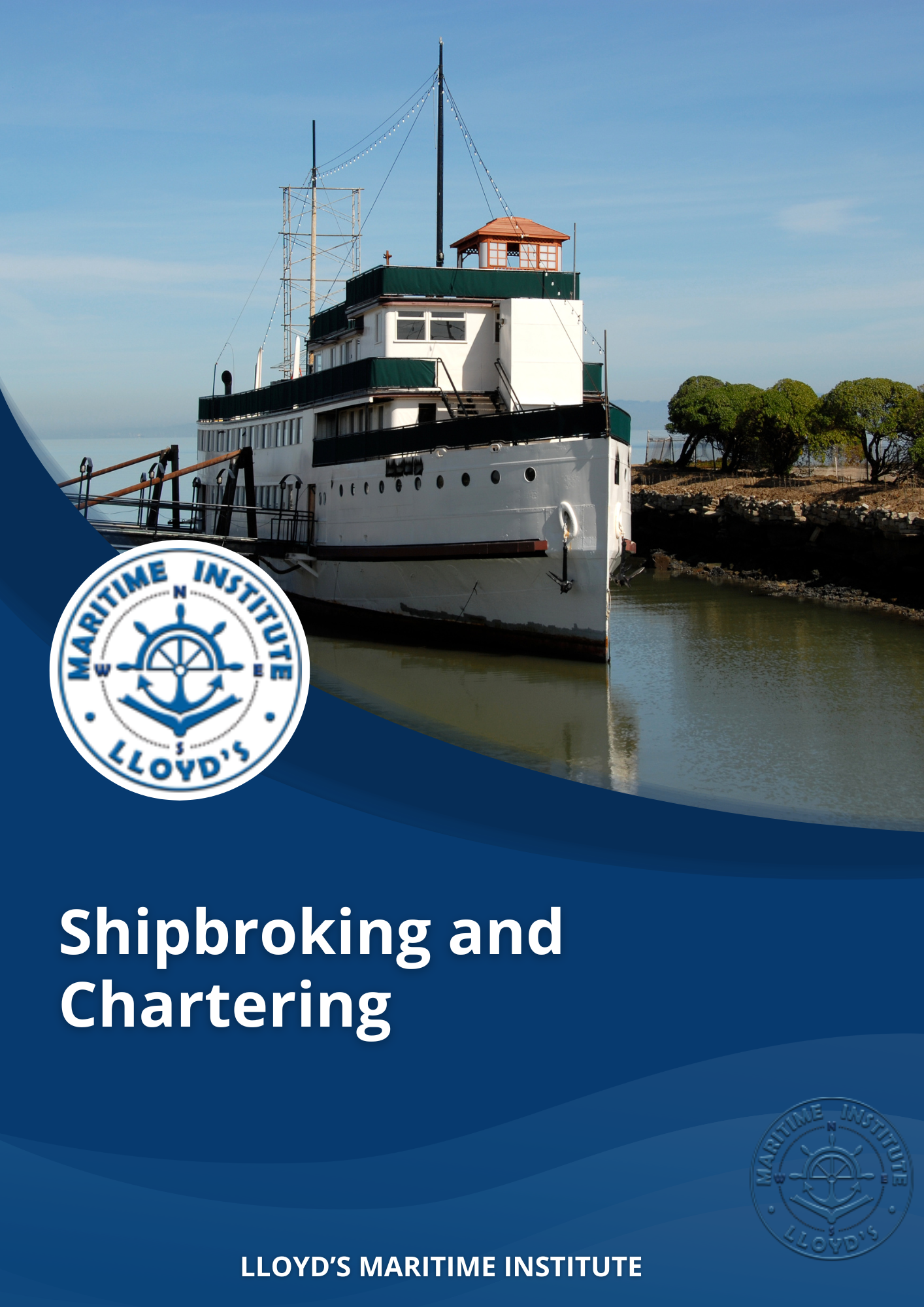
Shipbroking and Chartering
- Course Program
- Who Should Attend
- Compliance with regulations
- Duration and Teaching Methods
- Course Benefits
- Course Content
- Certification
Introduction
Shipbrokers play a pivotal role in facilitating transactions between shipowners and cargo shippers. They are actively involved throughout the various stages of a deal—introducing business opportunities, negotiating key terms, finalising contractual details, and overseeing the execution of agreements. In addition, brokers offer clients valuable market insights and strategic advice. A central element of their work is the use of charterparties—complex and detailed contracts essential to the global shipping industry, which is valued in the billions. Proper understanding and use of these contracts are fundamental to successful brokerage operations.Objectives
- Gain a clear understanding of shipbroking as a profession, including its origins, purpose, and role in the maritime industry
- Develop a solid grasp of the commercial, practical, and legal frameworks governing charter parties
- Explore key chartering issues, legal solutions, practical approaches, and preventative techniques
- Identify various chartering strategies and their applications
- Understand the structure, purpose, and legal implications of charter party agreements
- Comprehend the differences between CFR (Cost and Freight) and FOB (Free on Board) sale terms
- Analyze the fundamentals of voyage estimation and how freight rates are calculated
- Learn the definitions and practical application of laytime
- Acquire essential knowledge of bills of lading and their function in shipping contracts
Who Should Attend
This course is ideal for maritime professionals seeking to deepen their expertise in specific sectors of the industry. It is particularly beneficial for:- Shipowners, operators, and managers
- Maritime lawyers and legal consultants
- Marine engineers and technical superintendents
- Port and terminal operators
- Surveyors and classification society representatives
- Maritime insurance professionals
- Government and regulatory body personnel Lloyd's Maritime Institute
Course Benefits
- Acquire in-depth understanding of key maritime concepts and practices
- Enhance decision-making and problem-solving skills in real-world contexts
- Stay current with international regulations and industry trends
- Expand professional network through interactions with peers and experts
- Earn a recognized certificate upon successful completion, bolstering career advancement opportunities
Course Content
- Introduction, Market Context and Broking
- Time Charterparties I – Introduction and Owners’ Issues
- Time Charterparties II – Charterer Issues
- Voyage Charterparties I – Introduction and Owners’ Obligations
- Voyage Charterparties III – Laytime and Demurrage
Duration and Teaching Methods
The course spans five consecutive days, combining theoretical knowledge with practical application through:
- Expert-led lectures and presentations
- Interactive group discussions and case studies
- Hands-on exercises and simulations
- Real-world scenario analyses
Compliance with regulations
TOur courses are designed in alignment with international maritime standards and conventions, including:- International Maritime Organization (IMO) regulations
- SOLAS, MARPOL, and STCW conventions
- International Safety Management (ISM) Code
- International Ship and Port Facility Security (ISPS) Code
- Relevant ISO standards
Assessment
Certification
tt.png)


Membership





Copyright © LLOYD'S MARITIME INSTITUTE. All rights reserved.