- Also In:







+44 203 445 5766
institute@lloydmaritime.com


-

- Registration & Info
- Discover our institute
- Programs
-
Classroom
- Articles
- Opportunities
- Contact
Cargo care
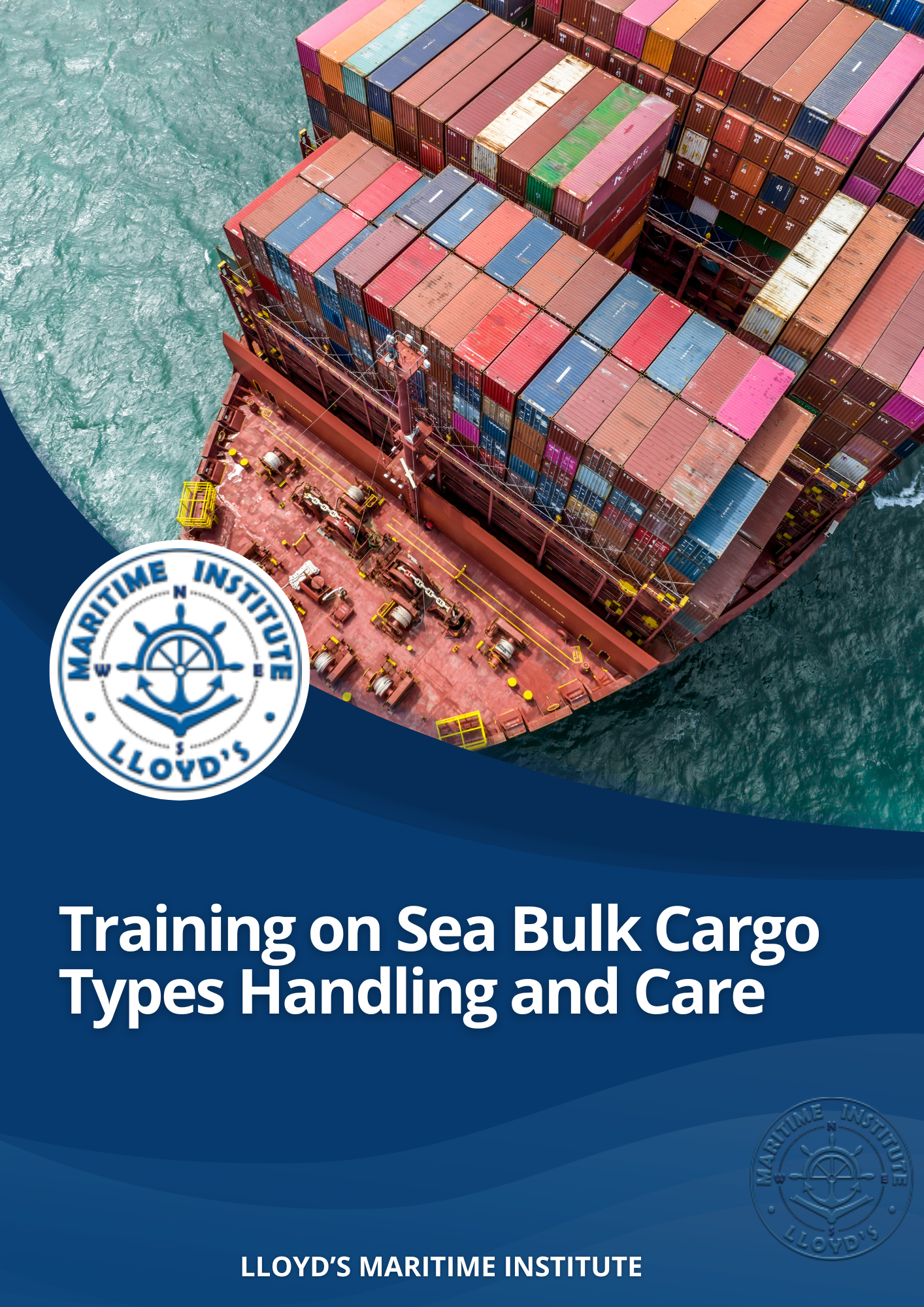
Training on Sea Bulk Cargo Types Handling and Care
- Course Program
- Who Should Attend
- Compliance with regulations
- Duration and Teaching Methods
- Course Benefits
- Course Content
- Certification
Introduction
Bulk cargo transportation plays a vital role in global trade and maritime logistics, demanding specialized knowledge of cargo characteristics, handling methods, and safety regulations. Whether transporting dry bulk commodities such as grain, coal, and ores, or liquid bulk like crude oil, chemicals, and edible oils, each cargo type involves distinct operational complexities that require careful planning and execution to ensure safety, efficiency, and regulatory compliance. This course provides a comprehensive, practical understanding of bulk cargo operations. Participants will gain hands-on experience in handling procedures, loading and discharge techniques, risk assessment, and operational problem-solving. Through real-life case studies, interactive sessions, and applied workshops, the program builds the critical skills needed to manage bulk cargoes effectively, minimize risks, and make informed operational decisions. By the end of the course, attendees will be equipped to handle various bulk cargoes confidently, ensuring operational efficiency and compliance with international maritime standards.Objectives
By completing this course, participants will be able to:- Identify various types of bulk cargoes and understand their specific properties and requirements.
- Apply proper handling and care techniques for both dry and liquid bulk cargoes.
- Understand and implement international safety and regulatory frameworks related to bulk cargo transportation.
- Conduct efficient loading and unloading operations while maintaining cargo integrity and vessel stability.
- Strengthen troubleshooting and decision-making skills to address common challenges in bulk cargo logistics.
Who Should Attend
This course is ideal for maritime professionals seeking to deepen their expertise in specific sectors of the industry. It is particularly beneficial for:- Shipowners, operators, and managers
- Maritime lawyers and legal consultants
- Marine engineers and technical superintendents
- Port and terminal operators
- Surveyors and classification society representatives
- Maritime insurance professionals
- Government and regulatory body personnel Lloyd's Maritime Institute
Course Benefits
- Acquire in-depth understanding of key maritime concepts and practices
- Enhance decision-making and problem-solving skills in real-world contexts
- Stay current with international regulations and industry trends
- Expand professional network through interactions with peers and experts
- Earn a recognized certificate upon successful completion, bolstering career advancement opportunities
Course Content
- Introduction to Bulk Cargo
- Dry Bulk Cargo Handling and Safety
- Liquid Bulk Cargo Operations
- Advanced Cargo Handling Techniques
- Problem-Solving, Risk Management, and Course Review
Duration and Teaching Methods
The course spans five consecutive days, combining theoretical knowledge with practical application through:
- Expert-led lectures and presentations
- Interactive group discussions and case studies
- Hands-on exercises and simulations
- Real-world scenario analyses
Compliance with regulations
TOur courses are designed in alignment with international maritime standards and conventions, including:- International Maritime Organization (IMO) regulations
- SOLAS, MARPOL, and STCW conventions
- International Safety Management (ISM) Code
- International Ship and Port Facility Security (ISPS) Code
- Relevant ISO standards
Assessment
Certification
tt.png)


Membership





Copyright © LLOYD'S MARITIME INSTITUTE. All rights reserved.